CHI 2026  ·  Barcelona, Spain

Authorship Drift

How Self-Efficacy and Trust Evolve During LLM-Assisted Writing

Yeon Su Park
KAIST
Nadia Arvi
KAIST
Seoyoung Kim
KAIST
Juho Kim
KAIST · SkillBench
ACM DL (TBA) arXiv Video

Abstract

Large language models (LLMs) are increasingly used as collaborative partners in writing. However, this raises a critical challenge of authorship, as users and models jointly shape text across interaction turns. Understanding authorship in this context requires examining users' evolving internal states during collaboration, particularly self-efficacy and trust. Yet, the dynamics of these states and their associations with users' prompting strategies and authorship outcomes remain underexplored. We examined these dynamics through a study of 302 participants in LLM-assisted writing, capturing interaction logs and turn-by-turn self-efficacy and trust ratings. Our analysis showed that collaboration generally decreased users' self-efficacy while increasing trust. Participants who lost self-efficacy were more likely to ask the LLM to edit their work directly, whereas those who recovered self-efficacy requested more review and feedback. Furthermore, participants with stable self-efficacy showed higher actual and perceived authorship of the final text. Based on these findings, we propose design implications for understanding and supporting authorship in human-LLM collaboration.

Presentation Video

TL;DR

Our work demonstrates that in LLM-assisted writing, users' self-efficacy declines while trust in AI increases, resulting in authorship drift from humans to AI.

🔄
Diverging Dynamics

Self-efficacy declined while trust grew, with trust acting as a buffer against declines in self-efficacy across interaction.

💬
Trajectories & Prompting

Users with declining self-efficacy fell into editing loops. Those who recovered shifted toward asking for review and feedback.

✍️
Trajectories & Authorship

Users with stable self-efficacy retained more authorship, both in text content and in their sense of agency over the final essay.

Study Design

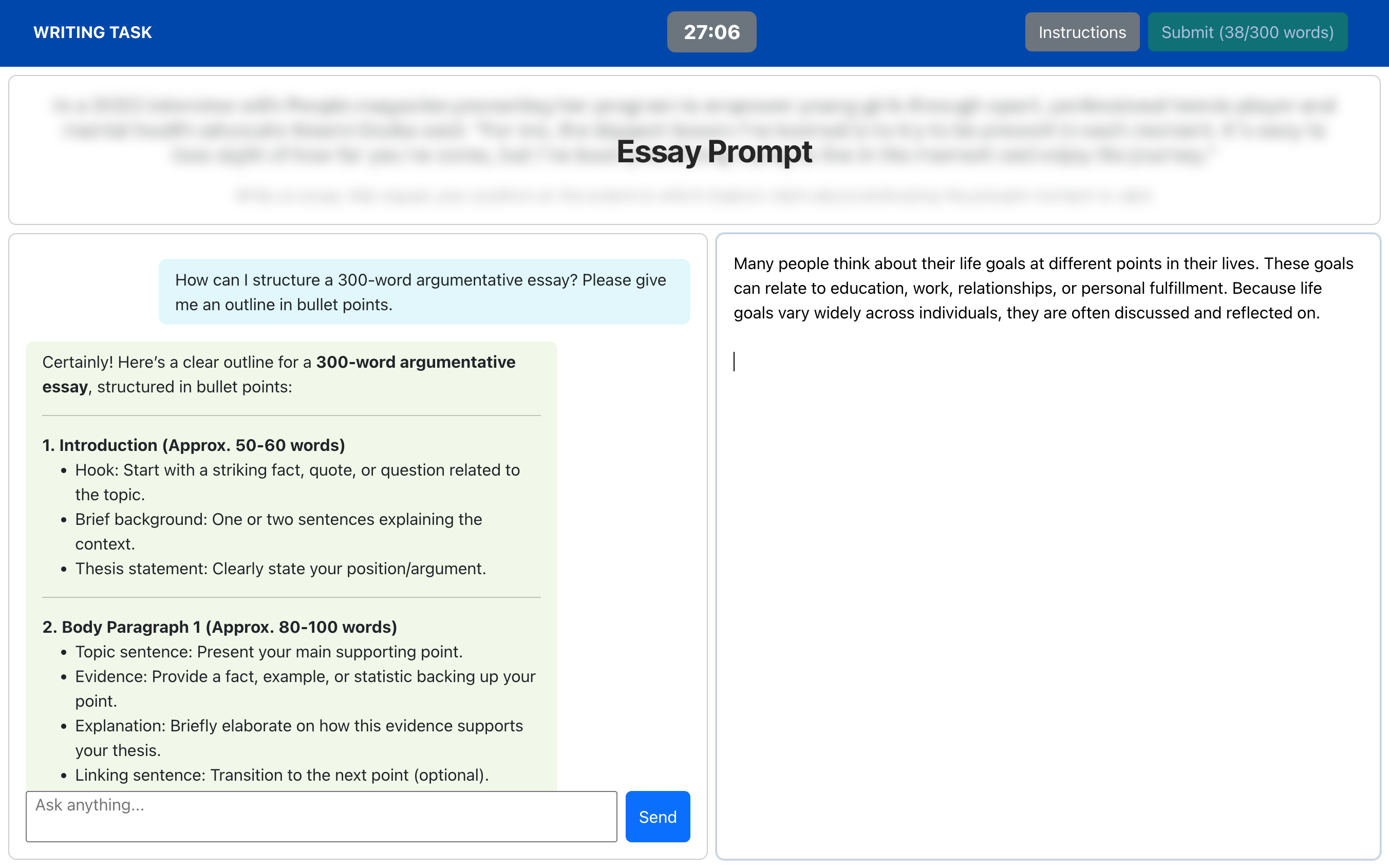
Participants wrote a 30-minute argumentative essay using a custom interface with an embedded LLM assistant.

Study Interface
Writing workspace with embedded LLM chat panel.
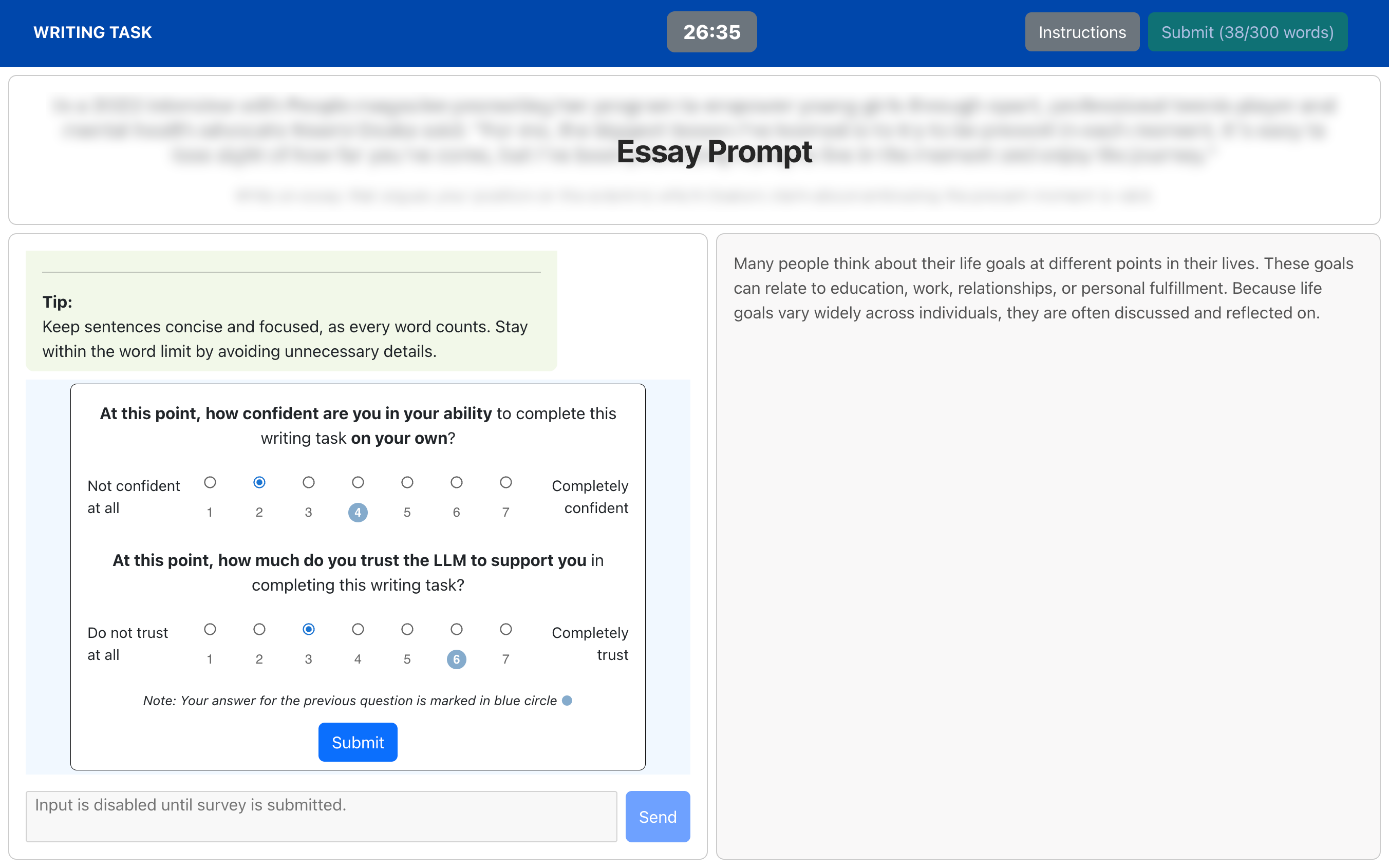
Self-Efficacy and Trust Rating Panel
Participants rated self-efficacy and trust before each prompt.

Before sending a new prompt, participants rated their current momentary self-efficacy and trust on a 7-point Likert scale, allowing us to track their trajectories across each interaction turn.

Self-Efficacy
User’s momentary belief in their ability to complete this task on their own.
Trust
User's momentary belief that the LLM will reliably support this task.

Key Findings

🔄 Diverging Dynamics of Self-Efficacy and Trust

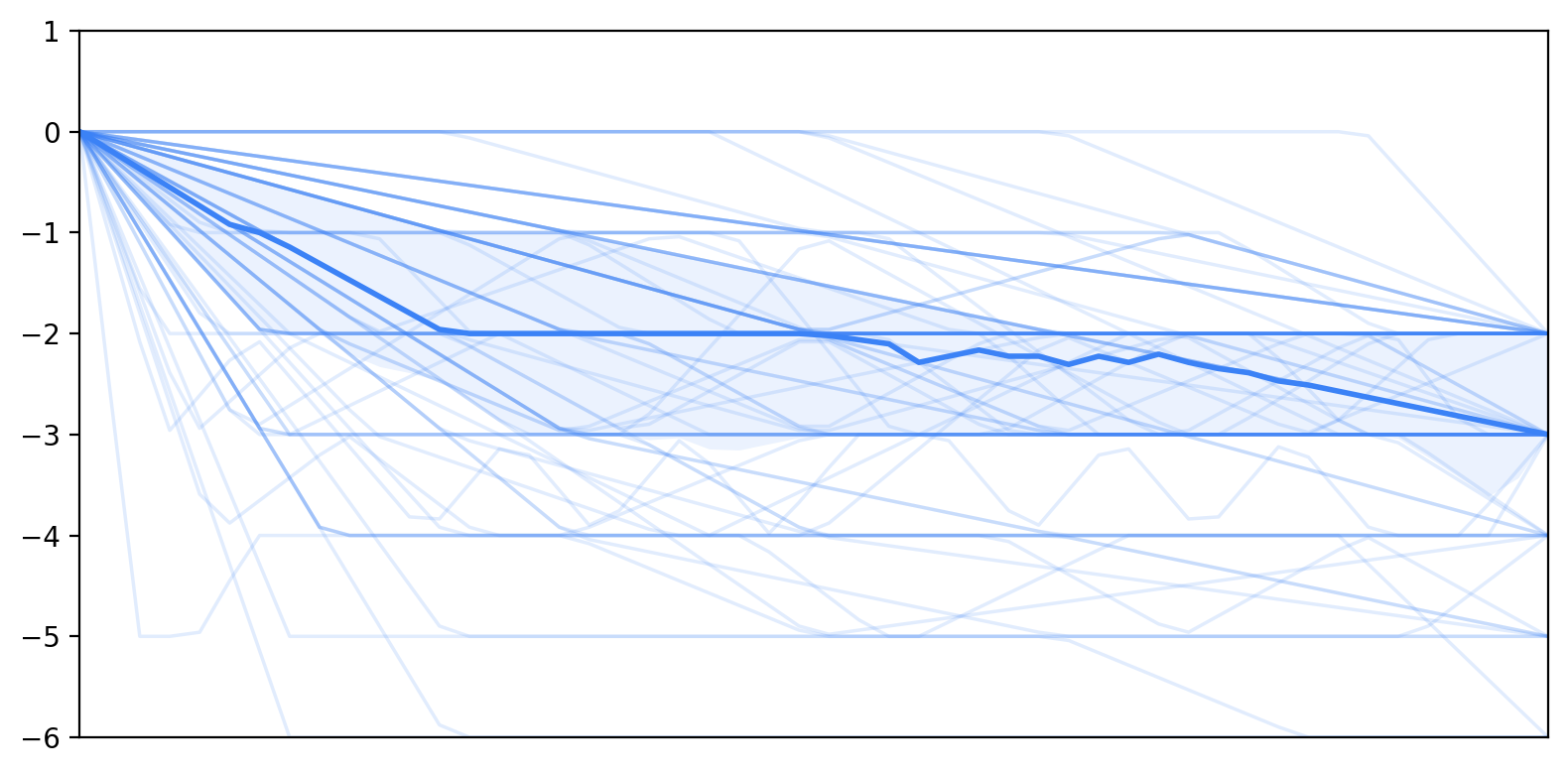
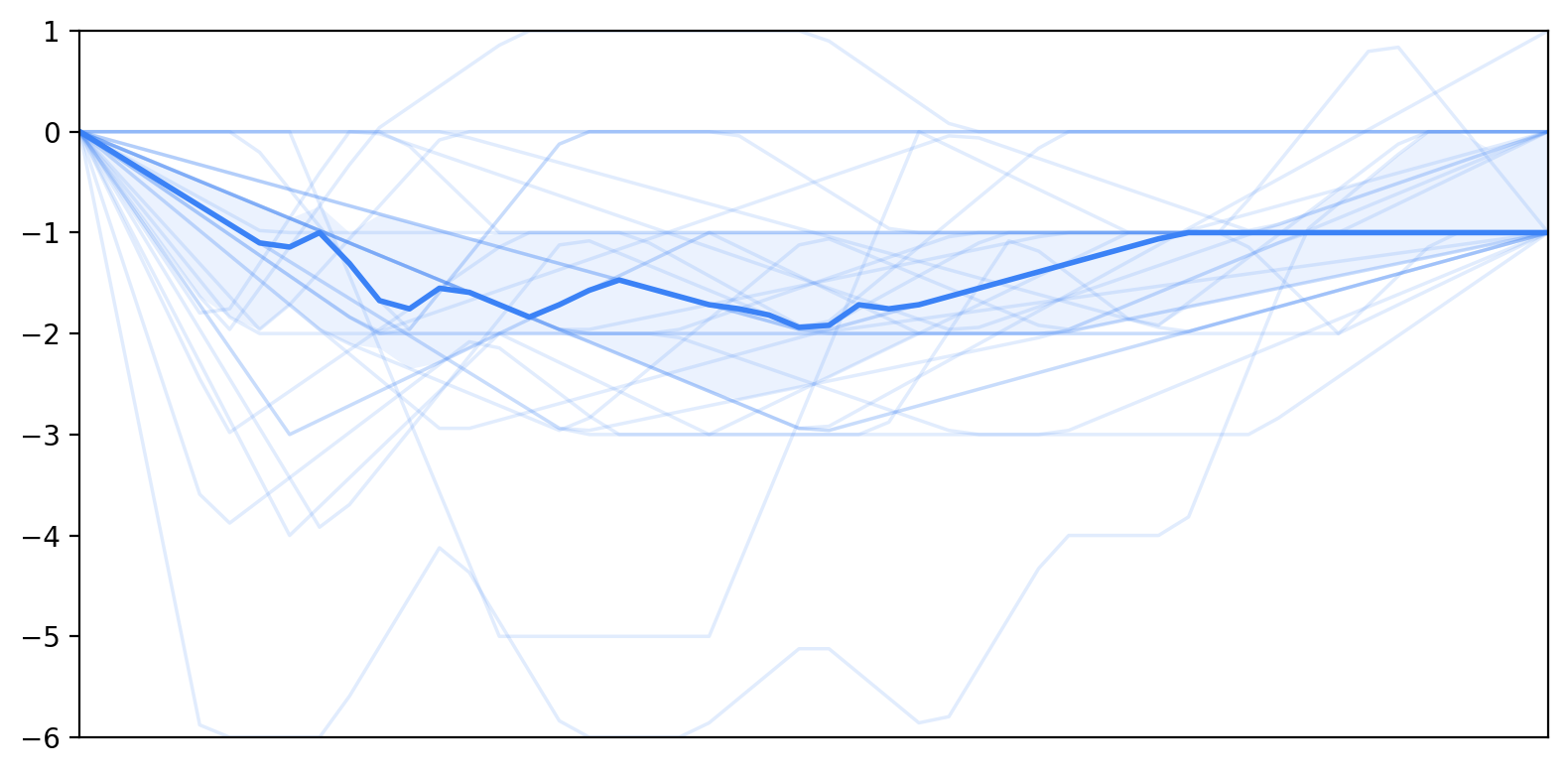
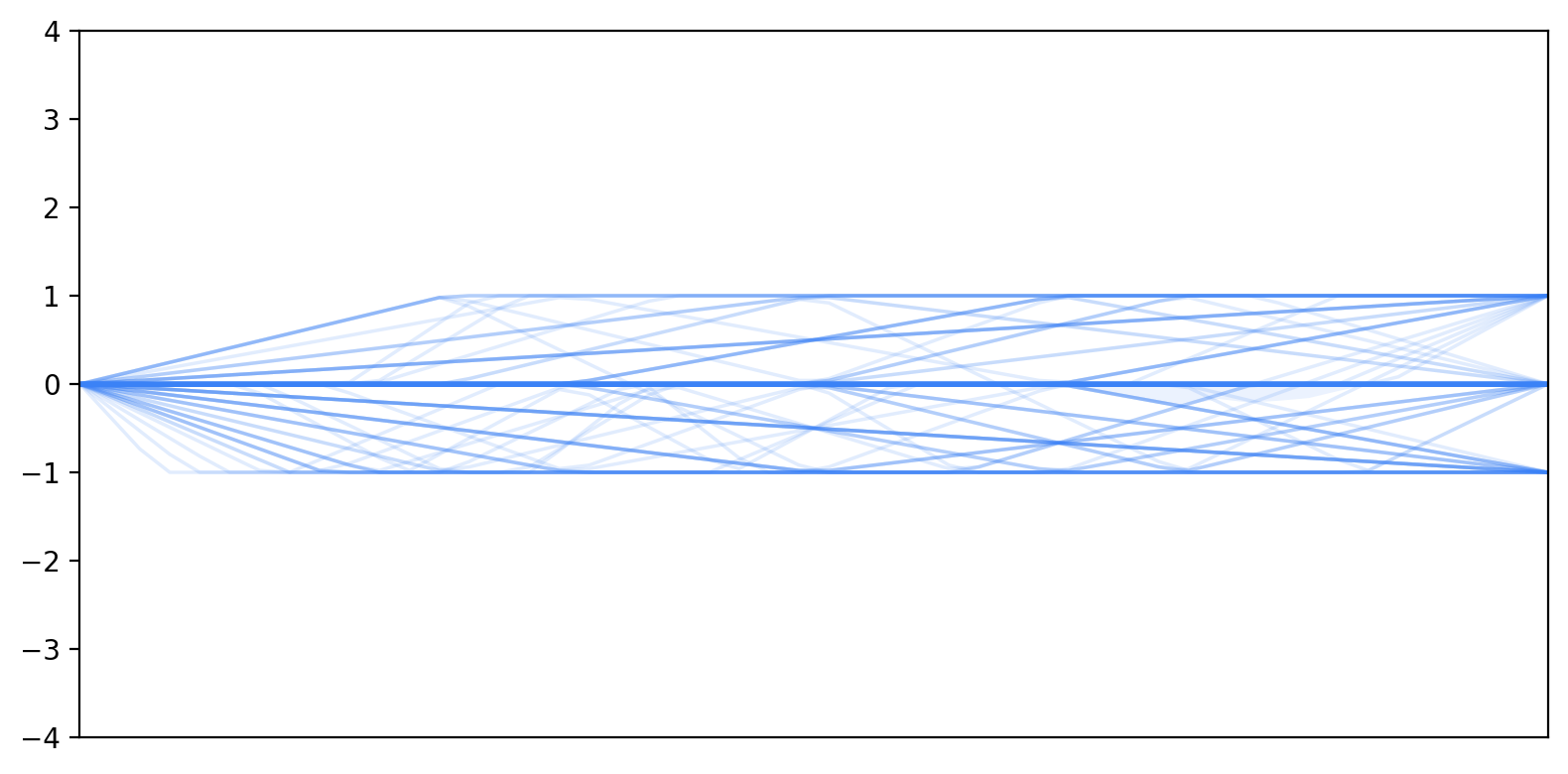
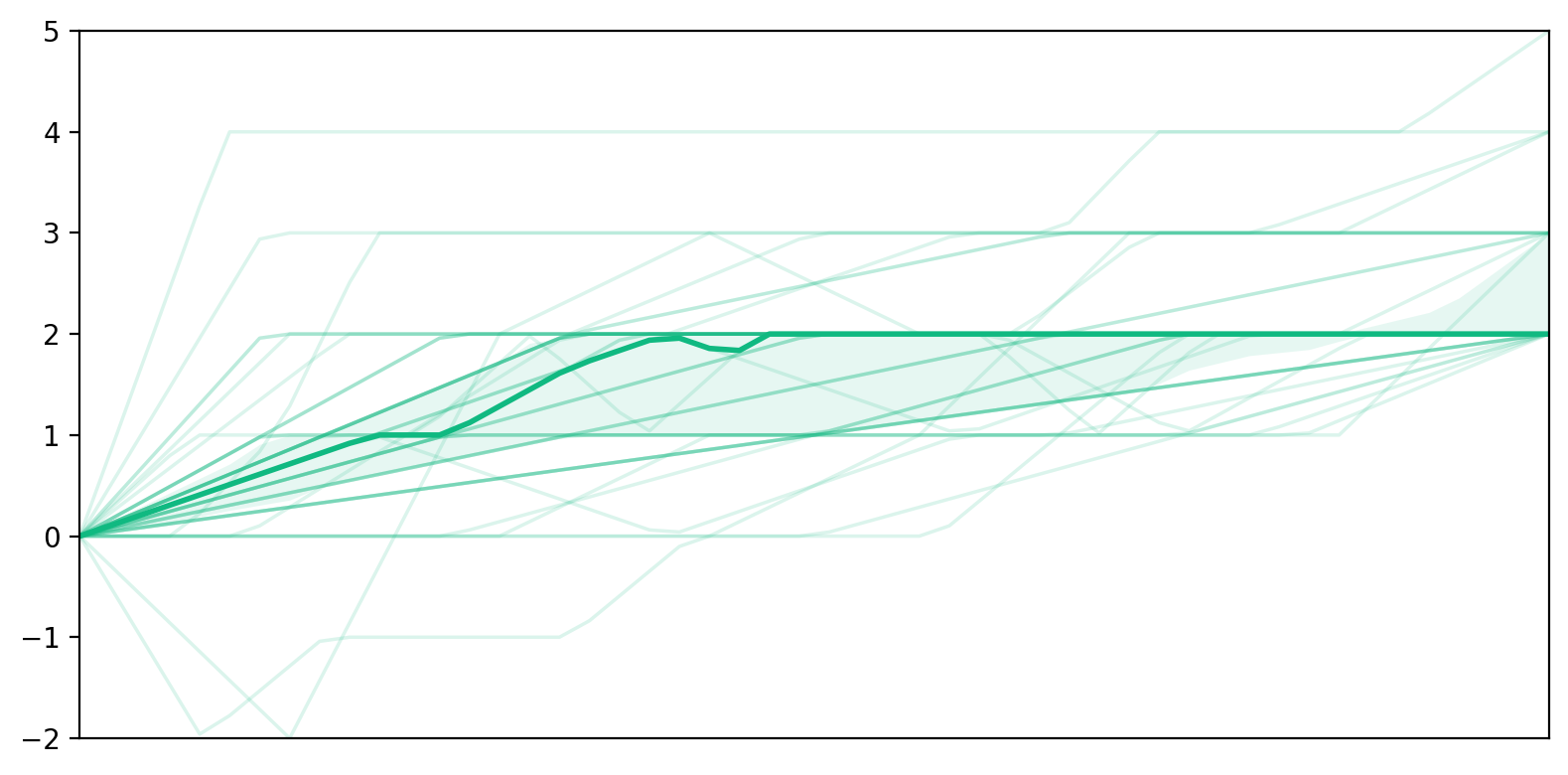
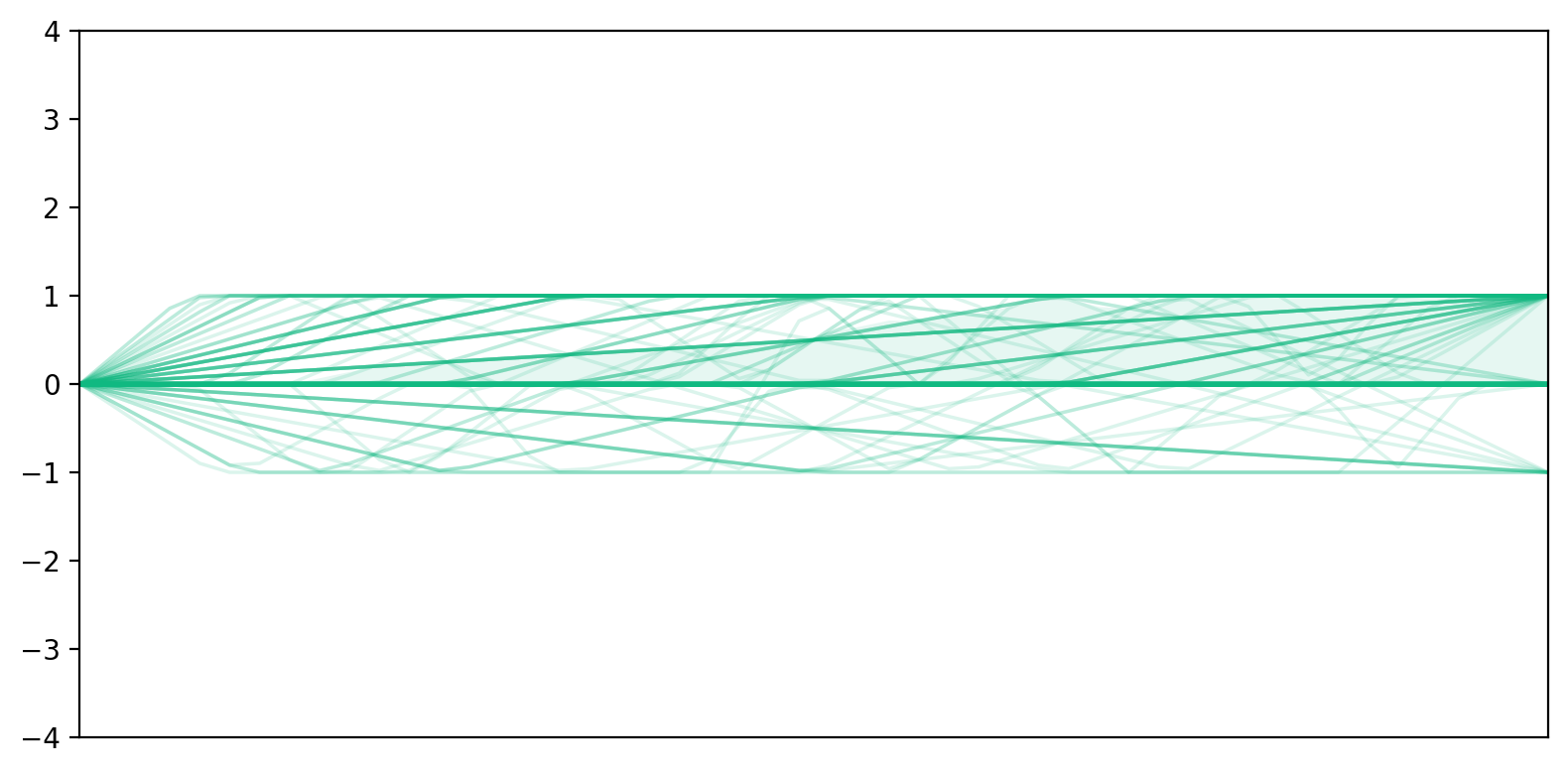
Self-efficacy declined across interaction turns while trust increased. Self-efficacy trajectories began at similar initial levels, and trust acted as a buffer against declines in self-efficacy.

Self-Efficacy Decrease Pattern
Self-Efficacy: Decrease
Self-Efficacy Recovery Pattern
Self-Efficacy: Recovery
Self-Efficacy Stable Pattern
Self-Efficacy: Stable
Trust Increase Pattern
Trust: Increase
Trust Stable Pattern
Trust: Stable

💬 Self-Efficacy and Trust Trajectories in Prompting

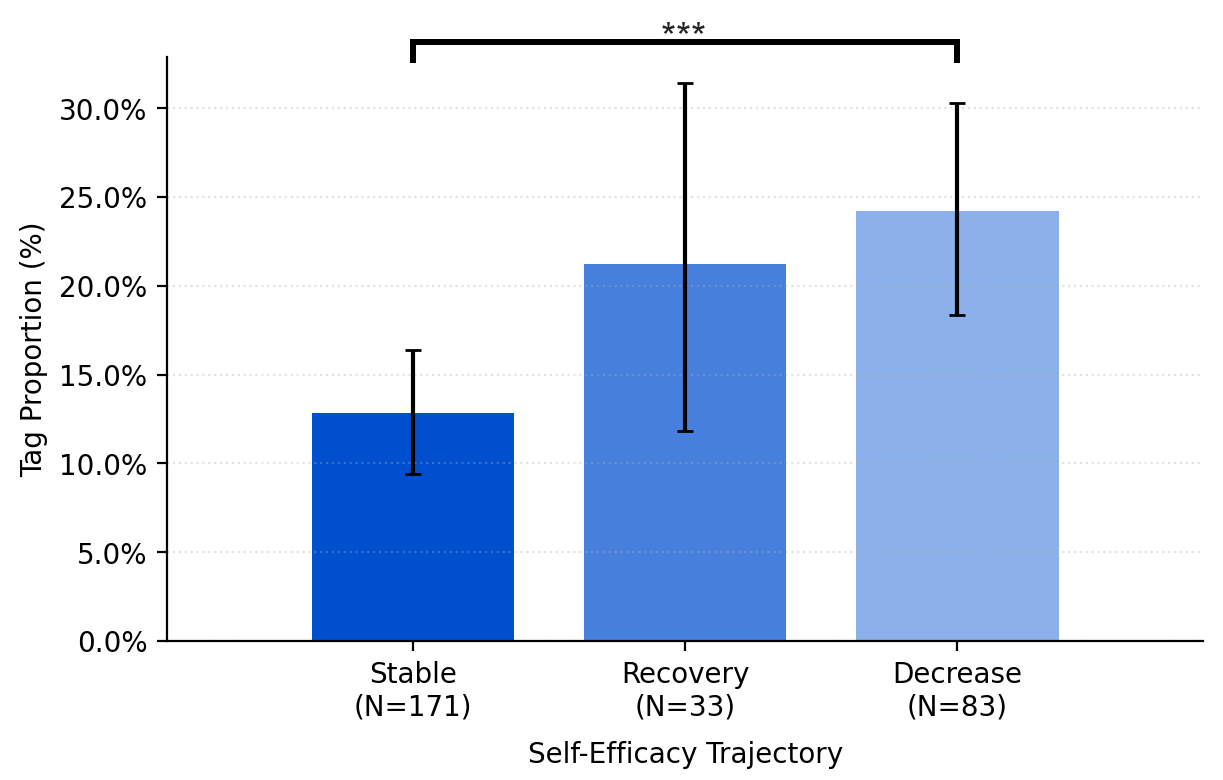
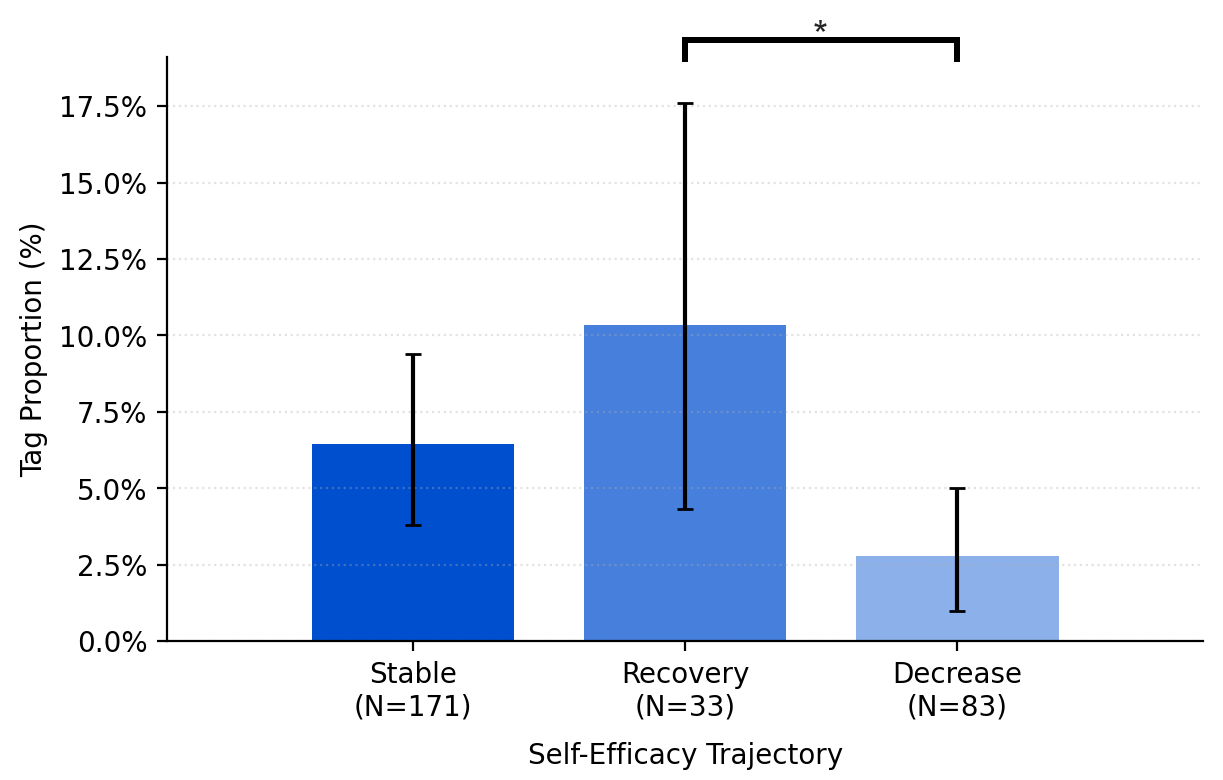
Users with decreasing self-efficacy used significantly more editing prompts. Those who recovered used significantly more reviewing prompts, repositioning the LLM as a critic rather than an editor.

Editing Prompts across Self-Efficacy Trajectories
Reviewing Prompts across Self-Efficacy Trajectories

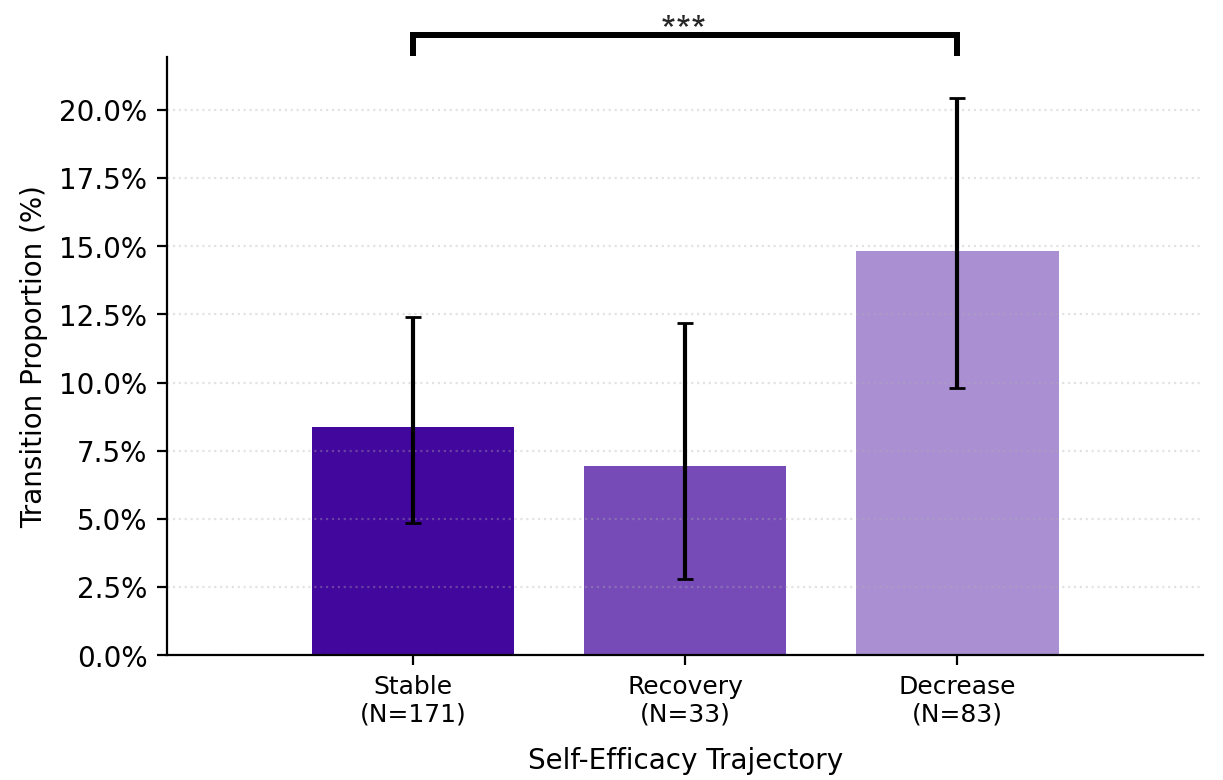
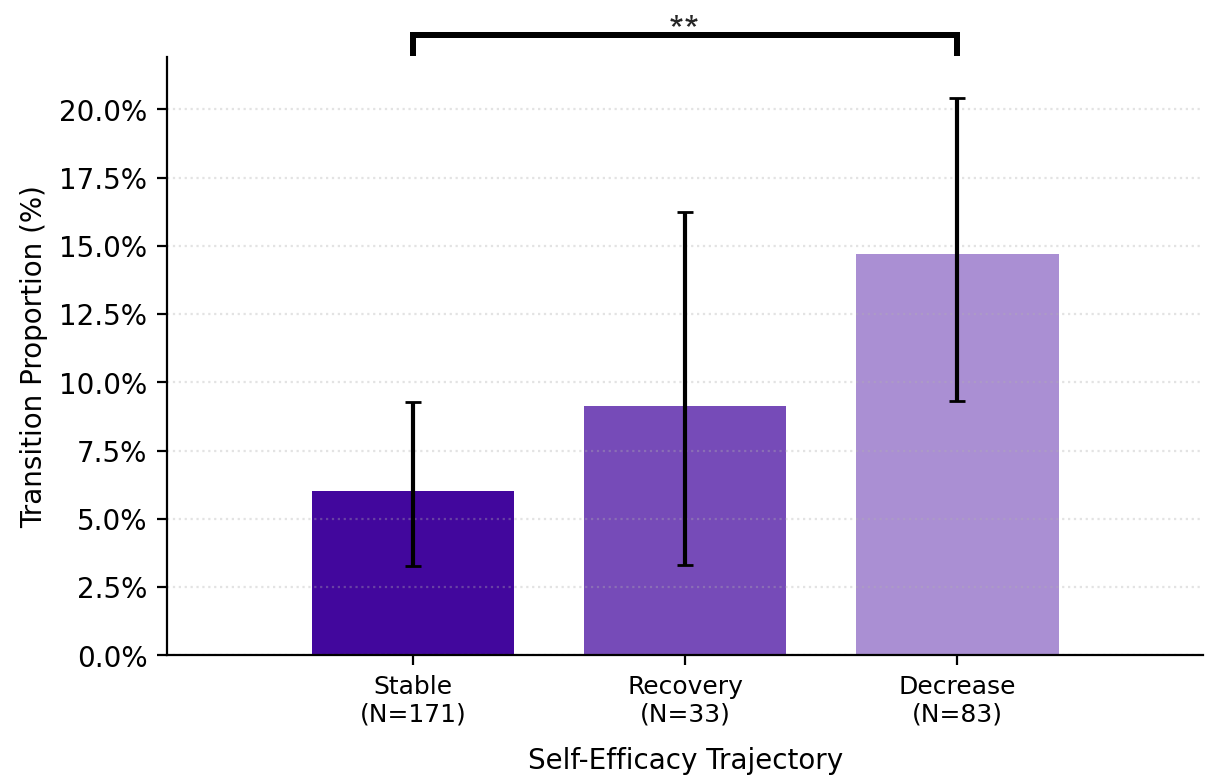
At the transition level, decreasing self-efficacy was marked by repetitive drafting-to-editing and editing-to-editing sequences that progressively handed authorial control to the LLM.

Drafting to Editing Transitions
Editing to Editing Transitions

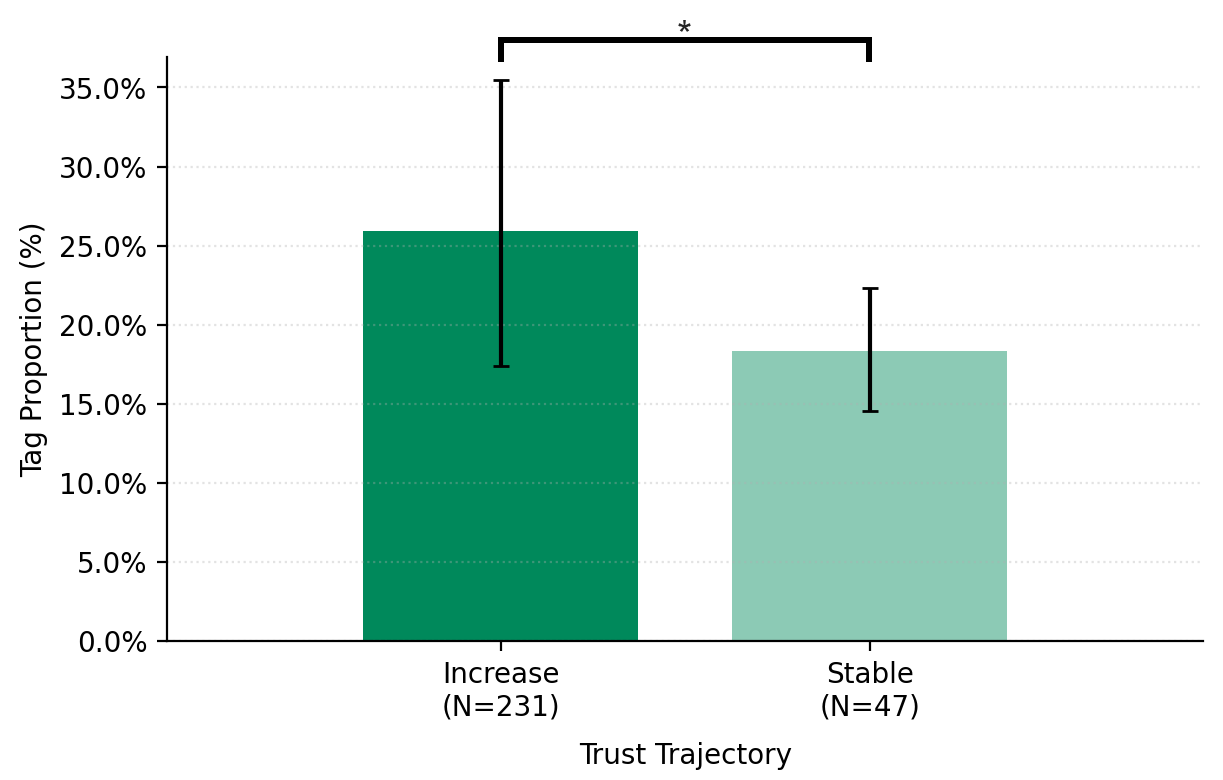
Users who began with lower trust used significantly more information-searching prompts.

Information Searching Prompts across Trust Trajectories

✍️ Self-Efficacy Trajectories and Authorship Outcomes

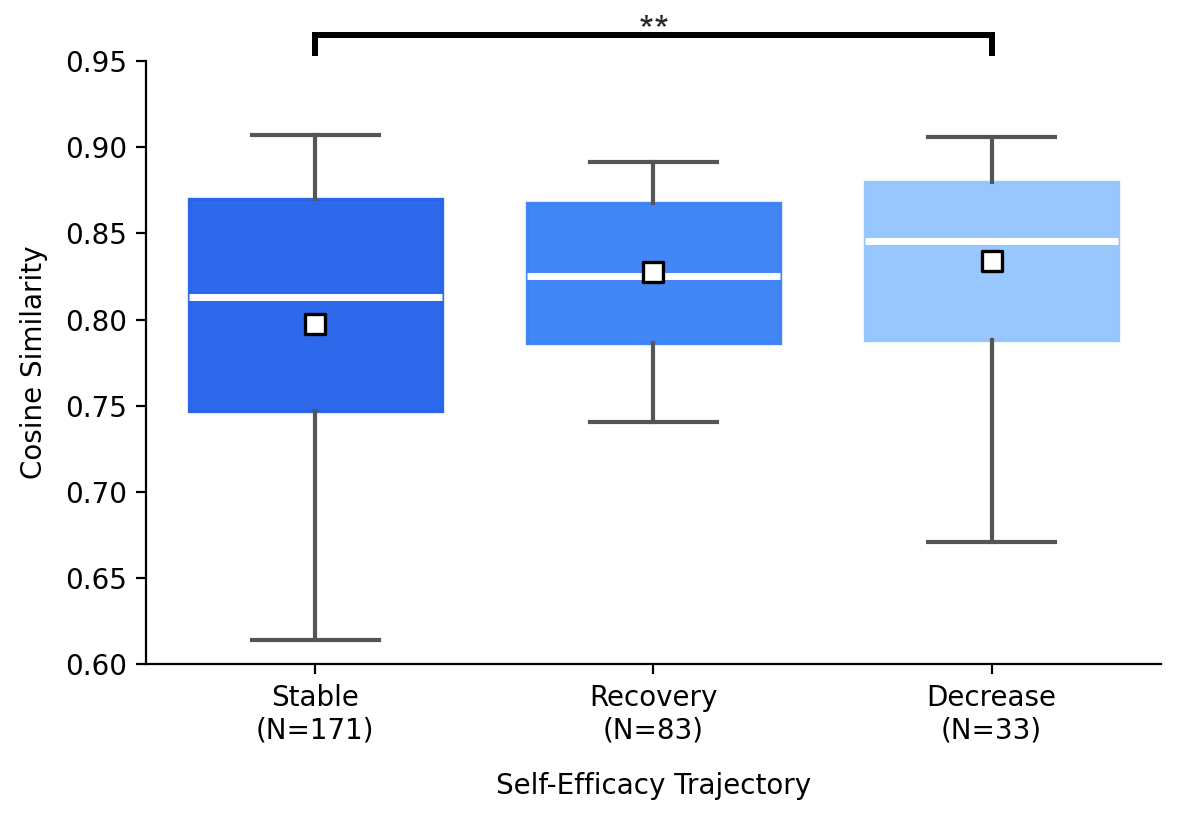
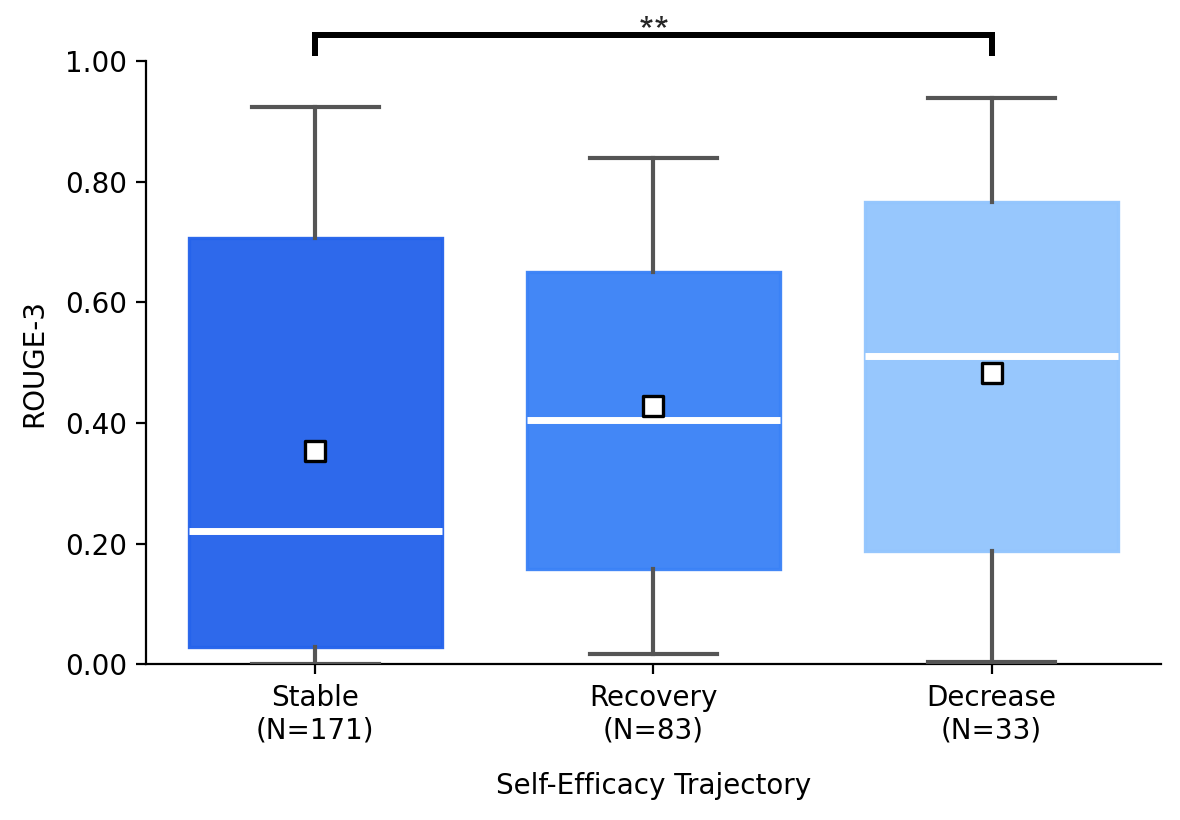
Users with decreasing self-efficacy had significantly greater lexical and semantic overlap with LLM output in their final essays, compared to the stable group.

Semantic Similarity via Embedding Distance
Semantic Similarity (Embedding)
Text Overlap via ROUGE Score
Text Overlap (ROUGE)

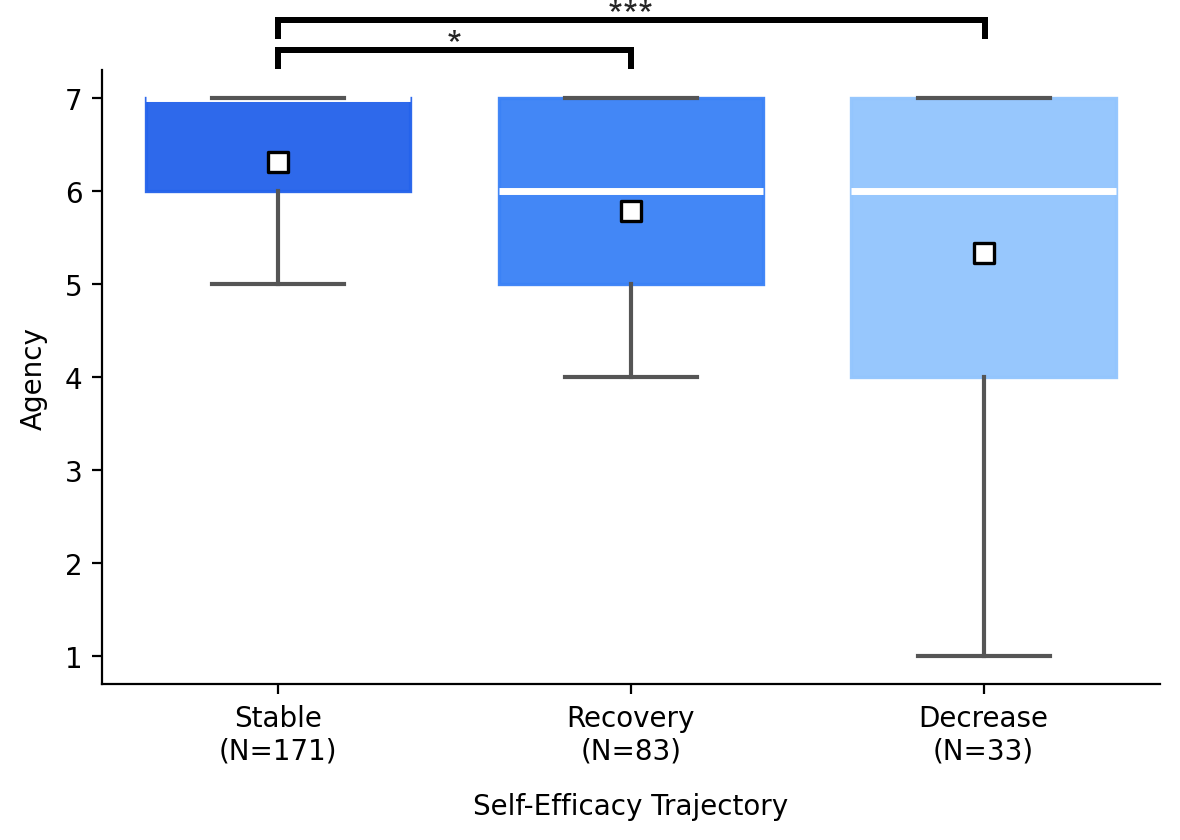
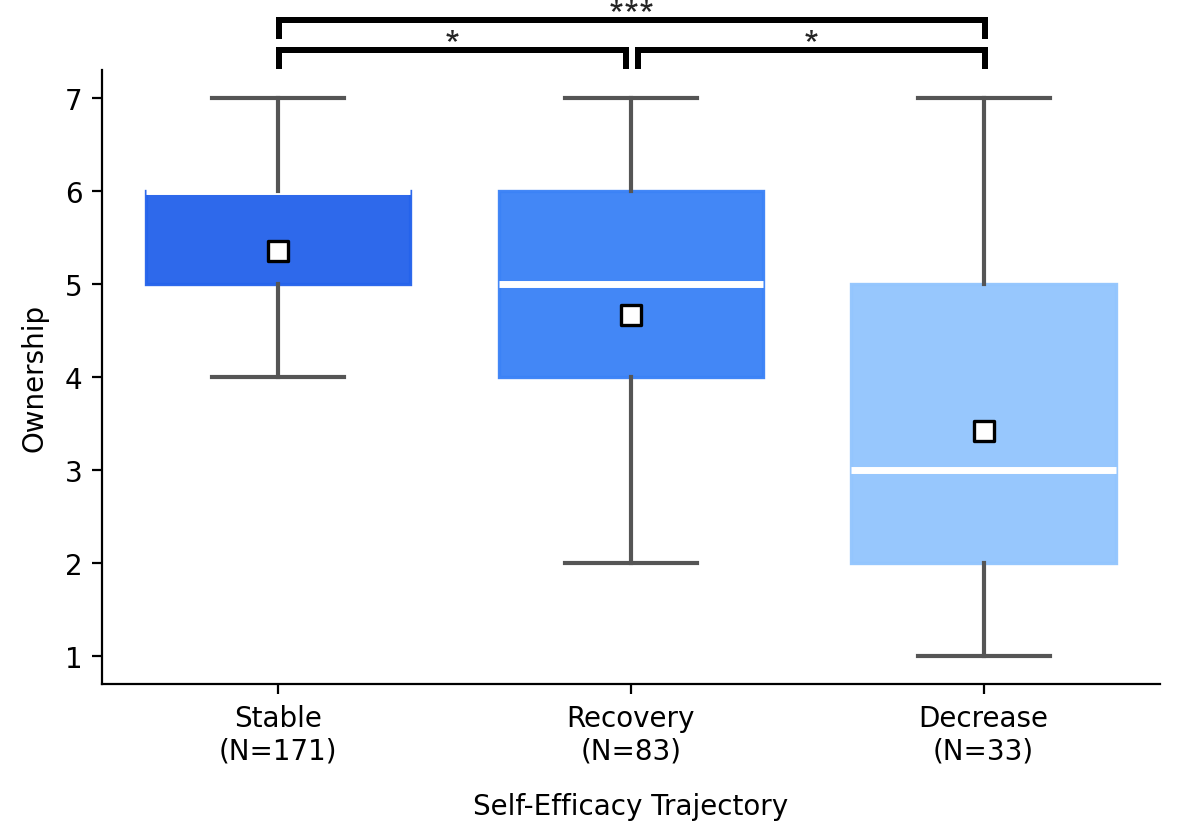
Perceived ownership and agency followed the same hierarchy across all three trajectory groups.

Perceived Agency
Perceived Agency
Text Ownership
Text Ownership

Takeaways

⏱️

Treat Self-Efficacy as a Dynamic Process

Self-efficacy is not a fixed trait but evolves over the course of interaction. Analyzing within-session trajectories provides a more informative basis than relying on baseline scores alone.

🔍

Observe Prompting Patterns to Detect Drift

Prompting patterns reflect self-efficacy trajectories. Editing-heavy patterns are associated with decline, while review-oriented prompts are more common in recovery. Lexical and semantic overlap provide complementary signals of how LLM outputs are incorporated.

🌐

Generalizing Authorship Drift in Other Domains

Because these shifts emerge in cognitively demanding, open-ended tasks where evaluating outputs is difficult in nature, they may extend beyond writing to other domains.

BibTeX

@article{park2026authorship,
  title={Authorship Drift: How Self-Efficacy and Trust Evolve During LLM-Assisted Writing},
  author={Yeon Su Park and Nadia Azzahra Putri Arvi and Seoyoung Kim and Juho Kim},
  year={2026},
  eprint={2602.05819},
  archivePrefix={arXiv},
  primaryClass={cs.HC},
  url={https://arxiv.org/abs/2602.05819},
}